Luxury Kitchen Cabinet Color Trends 2026: California Modern Meets Architectural Depth

In 2025, kitchen cabinet color shifted away from cool gray minimalism toward warmth and earth-inspired palettes.
In 2026, that movement is maturing.
Rather than introducing radically new colors, luxury kitchen design is refining the principles established last year. Warmth, material authenticity, and tonal layering now feel more architectural and less trend-driven.
National renovation data from the Houzz 2024 U.S. Kitchen Trends Study confirms that homeowners continue prioritizing timeless palettes and natural materials over bold experimentation. At the same time, 2026 design forecasting from House Beautiful’s KBIS coverage.
For another macro forecast shaping cabinetry, materials, and layout strategy, see our Curve Appeal: The Hottest 2026 Trend Reshaping Kitchen Design

What Evolved from 2025 to 2026?
In 2025, the focus was clear. Warm neutrals replaced gray. Beige resurfaced. Earthy greens became accent colors. Two-tone contrast defined many kitchens. Personality returned through soft color.
In 2026, that direction becomes more disciplined.
Contrast softens into tonal layering. Wood moves from accent to primary surface. Greens mature into architectural hues. Zoning replaces sharp separation. Longevity outweighs personal expression.
The difference is restraint.
2026 feels more considered than 2025.
1. Warm Neutrals: From Trend to Foundation
In 2025, beige and greige signaled the end of cool minimalism.
In 2026, they are no longer a reaction. They are the base language of luxury kitchens.
The Houzz study linked above notes continued preference for transitional and warm-modern kitchens, with neutral palettes dominating renovation choices. But this year, neutrals carry more complexity. Instead of flat beige cabinetry, designers are specifying mushroom tones with grey undertones, layered taupe variations, and putty hues paired with natural oak.
Warm white remains relevant, but it is frequently integrated with stone and textured finishes to avoid monotony.
In California homes where natural light is strong and constant, these undertones become architectural rather than decorative. Subtlety becomes visible.
2. Wood Moves from Accent to Anchor
Wood was prominent in 2025.
In 2026, it becomes structural.
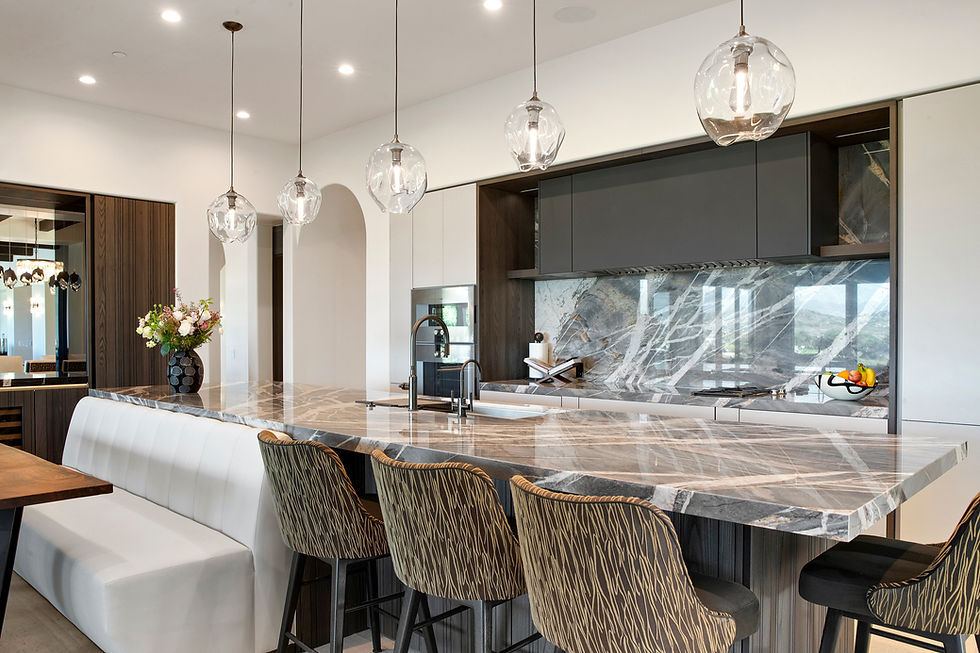
Interior trend reporting tied to KBIS 2026 continues to emphasize natural material integration, particularly mid-tone oak and walnut. What has changed is placement. Wood is no longer limited to an island base or open shelving accent. It now defines full-height cabinetry walls, appliance paneling, and entire perimeter compositions.
This evolution reflects a broader shift away from painted contrast toward material authenticity. In luxury German kitchen systems, engineered veneer precision ensures that warmth does not compromise alignment or durability.
Wood is not added. It is embedded into the architecture of the space.

3. Greens Mature Into Architectural Tones
Green remains present in 2026, but its saturation has softened.
House Beautiful’s 2026 KBIS trend reporting highlights the continued influence of biophilic design, though in more muted applications. Instead of bright sage or statement forest tones, designers are specifying olive-grey blends, softened eucalyptus, and moss undertones that integrate into broader neutral palettes.
These greens pair naturally with champagne bronze hardware, honed stone backsplashes, and matte lacquer finishes. They support the architecture rather than dominate it.
The emotional tone is calm, not expressive.
4. Two-Tone Becomes Tonal Zoning
Two-tone kitchens have not disappeared.
They have evolved.
In 2025, contrast drove the look. White uppers and dark lowers created visual division. Beige and black islands defined central statements.
In 2026, zoning replaces contrast.
As kitchen layouts continue moving beyond the traditional work triangle toward defined functional zones, color is used subtly to guide space. Designers are specifying slight shade shifts within the same neutral family rather than dramatic opposition. A taupe perimeter may meet a slightly deeper taupe island. Wood perimeter cabinetry may pair with a darker variation of the same species.
The result is cohesion.
The kitchen feels unified rather than segmented.
5. Pastels: From Accent to Atmosphere
Pastels remain relevant, but their role has narrowed.
Blush, mist blue, and pale sage appear primarily in secondary zones such as butler’s pantries or coastal-facing homes where light quality supports softness. These tones are heavily desaturated and applied with intention.
The emphasis in 2026 is atmospheric control rather than personality-driven color.
In luxury applications, pastel must feel integrated. Otherwise, it feels temporary.
6. Deep and Moody - Controlled and Matte
Dark cabinetry remains strong in 2026, but excess gloss and high contrast have declined.
Design commentary across national outlets, including Forbes’ reporting on fading kitchen trends, reflects a broader movement away from dramatic finishes toward more enduring palettes.
Deep navy, charcoal, espresso, and near-black tones are increasingly specified in matte finishes with minimal hardware contrast. Stone slab continuity and integrated detailing prevent heaviness.
Still dramatic. More restrained.
The California Context: Light Demands Subtlety
In California luxury homes, light is a design factor.
Strong daylight amplifies undertones. Indoor-outdoor continuity requires palette harmony. Long-term property value favors timeless materials.
Cabinet color selection in 2026 must account for UV exposure, reflection off natural stone, and integration with flooring and architectural finishes.
This is where German-engineered cabinetry excels. Precision lacquer systems and consistent veneer application ensure that tonal shifts remain controlled across expansive surfaces.
Color is not chosen in isolation. It is specified within an architectural system.
For a broader macro overview shaping these decisions, explore our Kitchen Hardware Trends 2026 and Kitchen Backsplash Trends 2026.
Our Orange County Kitchen showroom is designed to inspire: walk through full-size kitchen displays, explore material samples, and get expert advice from our design team. Your kitchen isn’t just a remodel - it’s a statement.
Visit LEICHT Costa Mesa, CA to discover visionary kitchen projects designed with architectural precision.