The Kitchen Design Debate : Minimalist vs. Maximalist Aesthetics

The kitchen design debate between minimalist and maximalist approaches is one that remains relevant in Southern California. For luxury kitchen designers in Costa Mesa, this is not just a matter of aesthetic preference, it's a fundamental question about how we experience the soul of the home.Both minimalist and maximalist design philosophies have their place, and the pros and cons of each style will be explored here. Especially in California, as coastal living collides with urban sophistication, it becomes more important to understand both sides of this kitchen design debate and evaluate which style is the best fit for timeless style and elegance.

What Defines a Minimalist Kitchen?
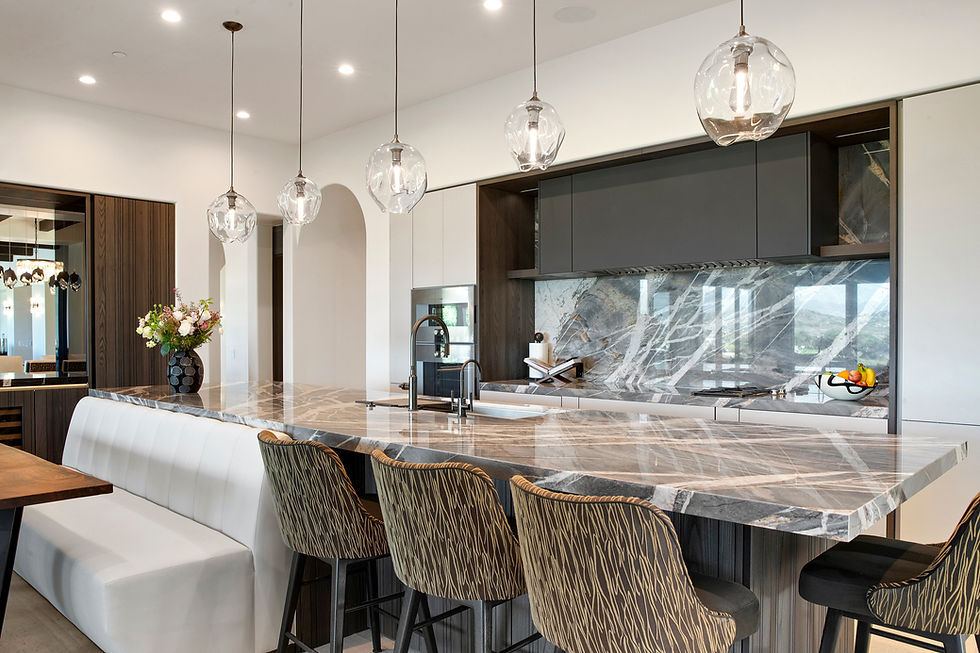
Minimalist kitchens embrace restraint as their guiding principle. Clean handleless cabinetry is used to create uninterrupted horizontal lines. Additionally, a carefully curated material palette is used as an effective way to maintain visual coherence. Integrated storage solutions also ensure that every appliance, utensil, and ingredient has its designated place and are hidden from view. Minimalist kitchens exemplify the precision that German kitchens are renowned for, where every element serves the larger composition. The result is an environment of visual calm, allowing the architecture to speak through absence rather than presence creating a space that feels both expansive as well as intimate.
The minimalist kitchen aesthetic operates on the principle that restraint creates visual and functional clarity. Utilizing clean horizontal lines and handleless cabinetry, the design often lends itself to monochromatic or neutral palettes and natural wood tones. Attempting to establish a sense of calm and spaciousness, this style is more likely to appeal to clients seeking sanctuary from visual overstimulation.
Some hallmark aspects include integrated appliances that disappear behind flush panels. Although open shelving is rarely used in these designs they can be integrated successfully to display only essential items in carefully curated arrangements. The material palette tends toward large-format surfaces: seamless quartz or porcelain countertops, full-height backsplashes, and wide-plank flooring that minimize grout lines and visual interruption.

Pros & Cons: Minimalist Kitchens
Some important aspects to bear in mind while evaluating of the pros and cons of a Minimalist kitchen design:
Pros: Minimalist designs offer enduring appeal that transcends fleeting trends, often translating into stronger resale value.
They create the illusion of expansiveness even in compact footprints, and their simplicity can feel profoundly peaceful in our cluttered world. The primary advantage of this aesthetic lies in the timelessness and the perception of expanded space. This effect is particularly valuable in urban environments where square footage commands premium pricing.
Cons: This approach demands absolute precision, a single misaligned cabinet or poorly integrated appliance disrupts the entire composition. Without careful attention to warmth and texture these minimalist spaces risk feeling sterile or unwelcoming. Additionally, the aesthetic demands rigorous discipline from occupants, as a single out-of-place object disrupts the entire composition. Storage solutions often are required to be exceptionally well-planned to keep countertops clear. The stark simplicity can also feel cold or impersonal to some clients, and the limited color palette may not satisfy those who view their kitchen as an expression of personality rather than a backdrop for living.
What Defines a Maximalist Kitchen?

By contrast, those on the other side of the kitchen design debate have a very different view of aesthetic expression. Maximalist kitchens take the opposite approach, celebrating abundance and personality creating spaces that function as curated galleries of the homeowner's aesthetic identity. Multiple textures layer together such as using reclaimed wood to create a stark contrast against polished marble. Maximalists often use statement materials to command attention rather than allowing them to recede into the background. This approach layers rich colors, mixed metals, varied textures, and often incorporates open shelving as an intentional display strategy for collections of ceramics, glassware, or cookware that become decorative elements.
Mixed finishes often create visual interest across every surface. In fact, California’s unique geography lends itself to this effect beautifully. Natural wood tones anchor the space while carefully selected pops of color, such as with artwork or textiles, can add personality without overwhelming the stunning desert views beyond. Maximalism can be used with expressive layouts that prioritize character over conformity. These spaces tell stories through their carefully curated excess. While cabinetry often combines multiple finishes: deep jewel-toned lowers with contrasting uppers, glass-front display cabinets, or even wallpapered interiors. Hardware becomes jewelry, with statement knobs and pulls in brass, copper, or ceramic adding tactile interest at every touchpoint. The maximalist kitchen accommodates the visual complexity of daily life more forgivingly, as additional items on counters integrate into the intentional abundance rather than appearing as clutter. This aesthetic particularly resonates with clients who entertain frequently and want their kitchen to spark conversation and convey warmth.
Pros & Cons: Maximalist Kitchens
Some important aspects to bear in mind while evaluating of the pros and cons of a Maximalist kitchen design:
Pros: Maximalist kitchens overflow with personality and warmth. They immediately convey the character of those who inhabit them. A well designed Maximalist kitchen will excel at storytelling, with each carefully chosen element contributing to a larger narrative about taste, travel, and values.
Cons: The challenges with Maximalist kitchens however, are significant: the design requires sophisticated spatial composition to avoid visual chaos. This is achieved with careful attention to scale, proportion, and the relationship between competing patterns. Maintenance demands increase substantially with more surface variations and decorative elements to clean. Perhaps most critically, maximalism risks dating quickly if trend-driven elements dominate over timeless principles. The density of visual information can feel overwhelming in smaller footprints where the eye has no place to rest. Without skilled design guidance, layered complexity can tip easily into visual chaos. This effect can even be overwhelming rather than delighting the eye.

Which Style Wins The Kitchen Design Debate?
Costa Mesa's architectural character offers compelling arguments for both sides of the kitchen design debate. The region's abundant natural light, which often streams through oversized windows and sliding glass doors, elevates minimalist palettes while adding depth to maximalist layers. The emphasis on indoor-outdoor flow suggests clean transitions and uncluttered sightlines, yet also invites the textural richness of natural materials. Perhaps most telling is the local entertaining culture, which values both the sophistication of refined spaces and the warmth of gathering places that feel genuinely lived-in and real.
Ultimately, this kitchen design debate depends less on which style is "correct" and more on how each serves the specific needs, preferences, and rhythms of an individual’s daily life. The most successful kitchens, regardless of their stylistic leanings, balance aesthetic vision with practical livability. The only way to be “correct” in the kitchen design debate is to create spaces that feel both carefully considered and genuinely comfortable and tailored to individual taste.
Visit LEICHT California's kitchen showroom in Costa Mesa to explore how both minimalist and maximalist design principles can be tailored to your unique vision. Our team of luxury kitchen designers specializes in creating custom German kitchens that reflect your personal style while honoring the best of European craftsmanship and California living.