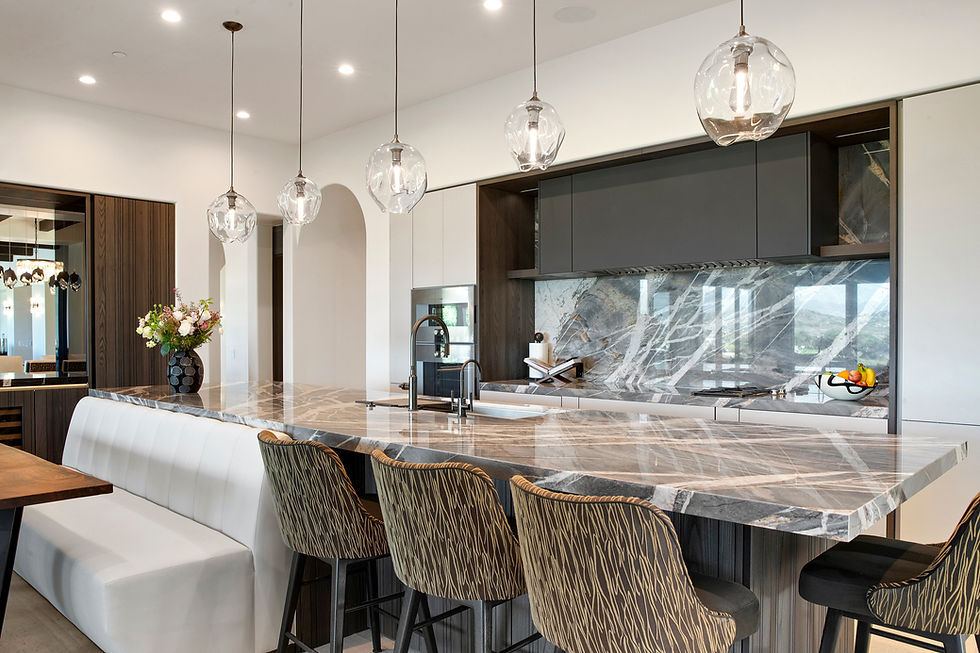
Kitchen Layout: Islands, L-Shaped, U-Shaped, Galley Kitchens…Oh My!

When planning a kitchen renovation, one of the most critical decisions you'll make is choosing the right kitchen layout. At LEICHT Costa Mesa, we've guided countless homeowners through this process, and we know that the perfect layout goes beyond just aesthetics. At our European kitchen showroom we showcase different kitchen layouts to see in real time how different configurations effect flow and space. The perfect kitchen is about creating a space that works seamlessly with your lifestyle. Let's explore the four most popular kitchen configurations, their benefits, and what to watch out for during the planning stages.

The Island Kitchen: Social Hub and Functional Centerpiece
A kitchen island incorporates a freestanding counter into any of the above mentioned layouts and serves as additional prep space as well as extra storage or seating areas. Kitchen islands are also famous for housing major appliances making them a statement piece in the kitchen.

Benefits:
Islands dramatically increase counter space and storage while creating a natural gathering point for family and friends. They're perfect for open-concept living, providing a subtle boundary between the kitchen and adjacent spaces without walls. Islands can be incredibly versatile, housing everything from cooktops and sinks to wine refrigerators and warming drawers. They also provide an ideal spot for casual dining or homework supervision while you cook.
Potential Pitfalls:
Islands require significant space to work properly. As a rule of thumb, you will need at least 42 to 48 inches of clearance on all sides for comfortable movement and to allow cabinet doors and appliances to open freely. If a kitchen is too-small, an island can create bottlenecks and actually reduce functionality. There are also additional costs for plumbing and electrical if you plan to include a sink, dishwasher, or cooktop.
Expert Insight:
Before committing to a kitchen island it is important to carefully consider how it will be used. Will it primarily serve as prep space, or do you want a cozy spot for seating? If seating is a priority, plan for at least 24 inches of width per person and ensure there's adequate knee space. Typically kitchen islands for seating require about 12 to 15 inches of overhang from the top of the island to be comfortable. Also, it is important to think about scale, the island should be proportional to your kitchen. We often see homeowners choose islands that are too large, which compromises the surrounding workspace.
The L-Shaped Kitchen Layouts: Versatile and Space-Efficient
The L-shaped kitchen, often seen with angles and open spaces, features cabinetry and appliances along two perpendicular walls. This outline creates a natural work triangle and leaves the remaining space open for dining or additional features.

Benefits:
This kitchen layout is incredibly adaptable to different room sizes and works beautifully in open-concept homes. The corner configuration creates an efficient work triangle between the sink, stove, and refrigerator while maximizing counter space. It's also an excellent choice for incorporating an island or dining table in the open area, making it ideal for families who want to combine cooking and socializing spaces.
Potential Pitfalls:
The corner can be challenging to utilize effectively. Without proper planning, L-shaped kitchens can easily lend themselves to creating dead spaces or areas that's difficult to access. Additionally corner cabinets require specialized solutions to be built into their design in order to be used effectively. These solutions include items like lazy Susans or pull-out systems, which can add to the overall cost. Additionally, in smaller kitchens, one leg of the "L" may become too short to be truly functional.
Expert Insight:
When designing an L-shaped kitchen, think carefully about what goes in the corner. At LEICHT Costa Mesa, we often recommend investing in the development of high-quality corner solutions from the start rather than treating them as an afterthought. Also, consider the length of each leg of the L-shape. Ideally, each should be at least eight feet to allow for adequate counter space and storage.
The U-Shaped Kitchen: Maximum Storage and Counter Space
A U-shaped kitchen surrounds the cook on three sides. This kitchen layout offers abundant cabinetry and work surfaces. This layout creates a self-contained workspace that's highly efficient for serious home cooks.

Benefits:
This configuration provides the most storage and counter space of any of the mentioned layouts, making it perfect for avid cooks who need room for multiple appliances and ample prep areas. The three-wall design creates a natural workflow and can accommodate multiple cooks without congestion. It also tends to keep kitchen activity contained, which is beneficial in homes with open floor plans where you want to minimize visual clutter.
Potential Pitfalls:
U-shaped kitchens require a significant amount of square footage space. Typically it is required to have at least 10 feet by 10 feet of space to avoid the kitchen feeling cramped. In smaller iterations, the enclosed feeling can often feel claustrophobic, and there's a risk of creating a workspace that's too tight to function properly. This layout can also isolate the cook from family and guests, which may not suit those who prefer a more social cooking experience.
Expert Insight:
The key to a successful U-shaped kitchen is maintaining adequate distance between the opposing walls. We recommend at least five feet of clearance to allow cabinet doors and appliances to open comfortably while still permitting easy movement. If your space is on the smaller side, consider removing the middle section of one wall to create a more open feel while retaining most of the storage benefits.
The Galley Kitchen: Efficiency in a Compact Footprint
Also known as a corridor kitchen, the galley layout features two parallel walls of cabinetry with a walkway between them. This design is rooted in ship galleys, where space efficiency is paramount.

Benefits:
Galley kitchens are incredibly efficient, especially for small spaces. They are great for creating the shortest possible work triangle. Everything is within easy reach, making this layout ideal for single cooks. This configuration maximizes storage in smaller spaces and works well in urban apartments or homes with limited square footage like downtown apartments or condos. The linear workflow also makes it easy to organize your kitchen by task zones.
Potential Pitfalls:
The narrow corridor can feel confining, and there's rarely room for casual seating or multiple cooks working simultaneously. Traffic flow can be problematic if the galley serves as a passageway to other parts of the home—family members walking through while you're cooking can disrupt your workflow. Limited counter space can also be challenging for those who use many appliances or need extensive prep areas.
Expert Insight:
If you're working with a galley kitchen, prioritize the width of the corridor—we recommend between four and six feet for optimal functionality. Less than four feet feels cramped; more than six feet creates too much walking between work zones. Also, if possible, avoid placing the galley in a high-traffic area. A dead-end galley is far more functional than one that serves as a hallway.

Bringing It All Together
The right kitchen layout depends on your space, cooking habits, and lifestyle. An L-shaped kitchen offers flexibility for growing families, while a U-shaped configuration suits serious cooks who prioritize workspace. Galley kitchens maximize efficiency in compact homes, and islands transform any layout into a social hub.
At LEICHT Costa Mesa, we believe that exceptional kitchen design begins with understanding how you live. During the planning stages, our team of luxury kitchen designers, consider not just your current needs but how your lifestyle might evolve. Think about who cooks, how many people typically work in the kitchen simultaneously, whether you entertain frequently, and how the kitchen connects to adjacent living spaces.
The best layout is one that feels intuitive to you, where movement flows naturally and everything has its place. By carefully weighing the benefits and potential challenges of each configuration, you'll create a kitchen that's not only beautiful but also a joy to use for years to come.
Ready to start planning your dream kitchen? Visit our German kitchens showroom in Costa Mesa to see these layouts in action and discover how LEICHT's innovative design solutions can transform your space.