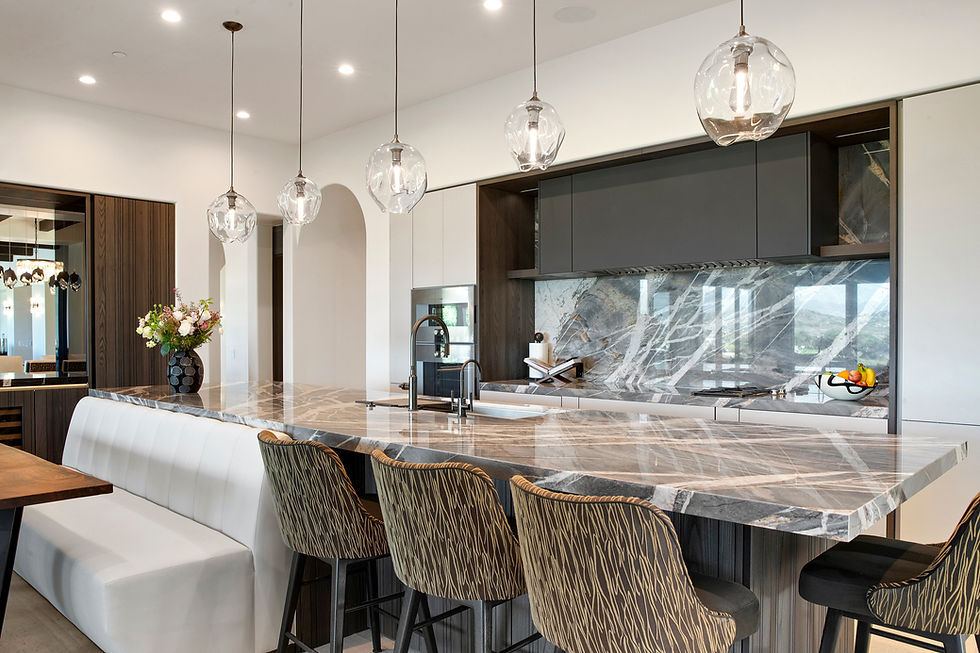
Kitchen Hardware Trends 2026: Architectural Precision for Luxury California Homes

In 2026, kitchen hardware is no longer treated as a decorative finishing touch. In luxury residential design, it functions as an architectural component - reinforcing proportion, supporting ergonomics, and maintaining visual continuity across cabinetry and integrated appliance panels.
This direction aligns with the broader industry view coming out of NKBA/KBIS reporting and homeowner renovation research from Houzz: high-end kitchens are trending toward “timeless/transitional,” modern minimalism, and organic/natural expressions - all of which favor refined finishes and visually quiet, performance-driven detailing.
2026 does not reinvent hardware trends - it refines them. See our Kitchen Hardware Trends 2025 to understand where this evolution began.

1. Warm Metallic Finishes Stay Dominant, But More Muted
High-polish chrome continues to fall out of favor in luxury spaces. In its place: warmer metallics with softer reflectivity and more depth.
Across KBIS trend coverage, finishes and fixtures are moving toward refined warmth - brushed brass, champagne bronze, aged bronze - used delicately to complement wood, stone, and matte cabinetry rather than compete with them.
What this means in practice for luxury kitchens:
Brushed brass and champagne bronze outperform mirror finishes
Aged/antique tones read more architectural than decorative
Dark brushed nickel and gunmetal introduce contrast without glare
These finishes pair especially well with dark-stained oak, warm neutrals, and full-height slab applications - a direction consistently reinforced in 2026 kitchen trend editorials.

2. Integrated, Low-Profile Hardware Systems Lead Modern Luxury
The defining “luxury” move in 2026 is visual quiet: clean cabinet planes, fewer breaks, and hardware that reads as part of the system.
Houzz’s 2026 U.S. Kitchen Trends Study - based on a homeowner survey documents renovation preferences that increasingly prioritize function-first storage and integrated solutions. That demand translates directly into streamlined pulls, recessed channels, and handleless systems.
Common choices in 2026:
Recessed channel pulls
Edge pulls for slab-front cabinetry
Integrated finger-pull rails
Push-to-open for select zones
This also aligns with designers’ broader move away from rigid “work triangle” thinking toward kitchen zones which tends to produce more cabinetry runs and more integrated storage (and therefore more emphasis on hardware ergonomics).
3. Mixed Finishes and Tactile Detail - Curated, Not Random
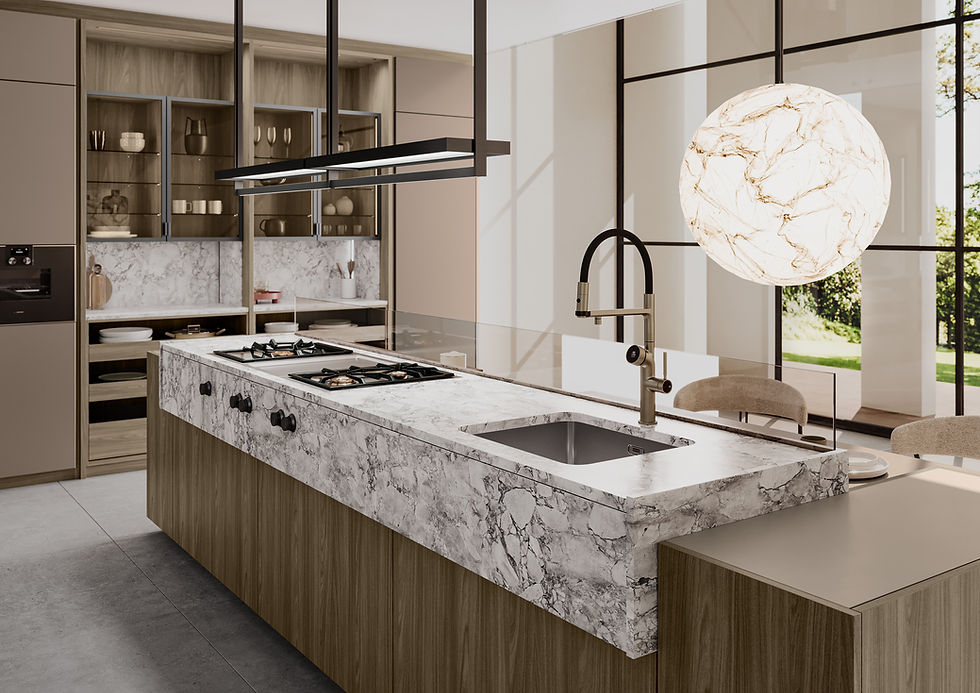
Uniform hardware throughout the entire kitchen is giving way to curated contrast. Subtle, intentional, and consistent with the overall palette.
2026 trends show a continued appetite for layered textures and more personal, less formulaic interiors. In luxury kitchens, that often appears as:
One “primary” finish (e.g., champagne bronze)
One “supporting” finish (e.g., dark nickel or matte black)
A tactile detail (knurling, micro-texture, leather wrap) used sparingly
This broader movement toward texture and layering is widely reinforced in 2026 interiors reporting.
4. Local Design Influences: The LA Aesthetic
Uniform hardware throughout the entire kitchen is giving way to curated contrast. Subtle, intentional, and consistent with the overall palette.
2026 trends show a continued appetite for layered textures and more personal, less formulaic interiors. In luxury kitchens, that often appears as:
One “primary” finish (e.g., champagne bronze)
One “supporting” finish (e.g., dark nickel or matte black)
A tactile detail (knurling, micro-texture, leather wrap) used sparingly
This broader movement toward texture and layering is widely reinforced in 2026 interiors reporting.See Leicht CA full Projects

5. Ergonomics and Scale Matter More Than Ever
Of course, luxury kitchens aren’t just about appearance - they’re built for daily performance.
As kitchen design continues shifting toward zoned layouts and storage-first planning, oversized drawers, pantry walls, and integrated refrigeration panels are more common - which makes pull scale and grip comfort a must.
2026 best practice in high-end projects:
Longer pulls on wide drawers for balanced force distribution
Comfortable projection depth for heavier panels
Soft-close and high-cycle durability as baseline expectation
You can also check our Kitchen catalogs for inspiration. Let's bring your vision to life with the finest European craftsmanship and cutting-edge style.
5. Sustainability Shows Up as Material Integrity and Longevity
In the luxury segment, sustainability is all about providing eco-friendly materials that age well.
Industry trend reporting from NKBA/KBIS emphasizes future kitchens that incorporate personalization, performance, and long-term design. Meanwhile, homeowners continue to prioritize investments in long-lasting remodel planning.
Practical hardware selections that support this:
Recycled-content metals
Durable plated or PVD-style finishes (high-wear zones)
Repairable, serviceable mechanisms rather than disposable components
California Context: Warm Modernism, Architectural Restraint
California luxury kitchens continue to favor warmth and indoor-outdoor continuity wood, stone, matte finishes, with hardware acting as a controlled accent.
This aligns with the broader 2026 move away from overly formulaic kitchens and into more personalized, layered spaces (while still keeping the kitchen visually calm).